Dermatophyllum secundiflorum (syn. Sophora secundiflora)
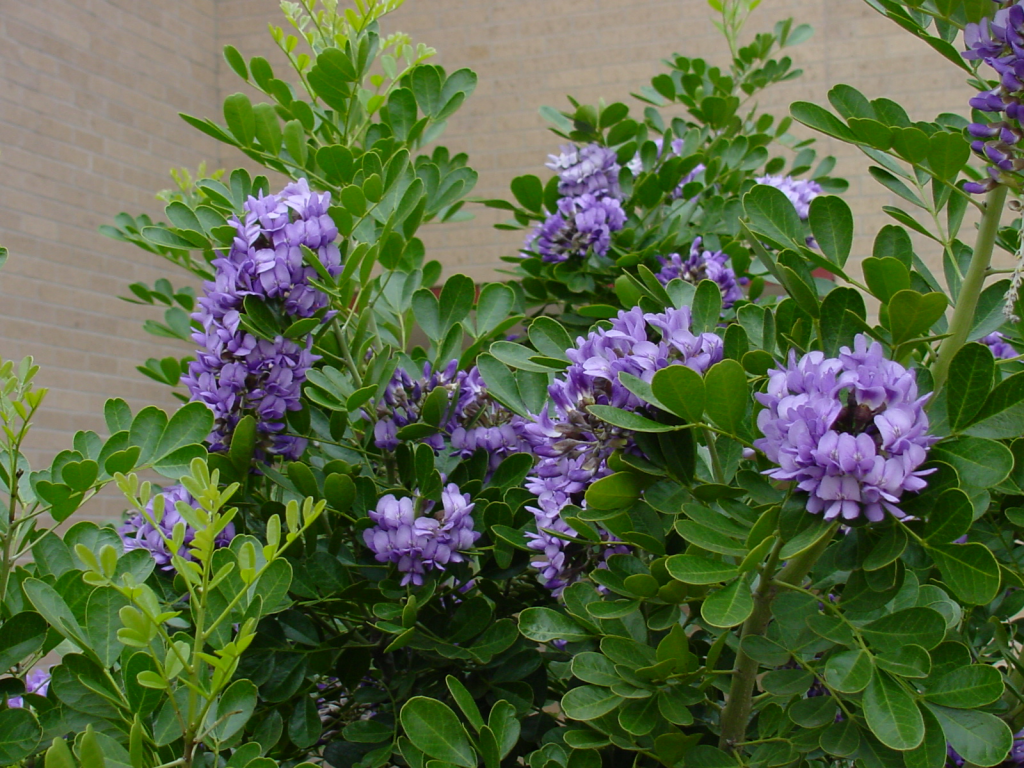
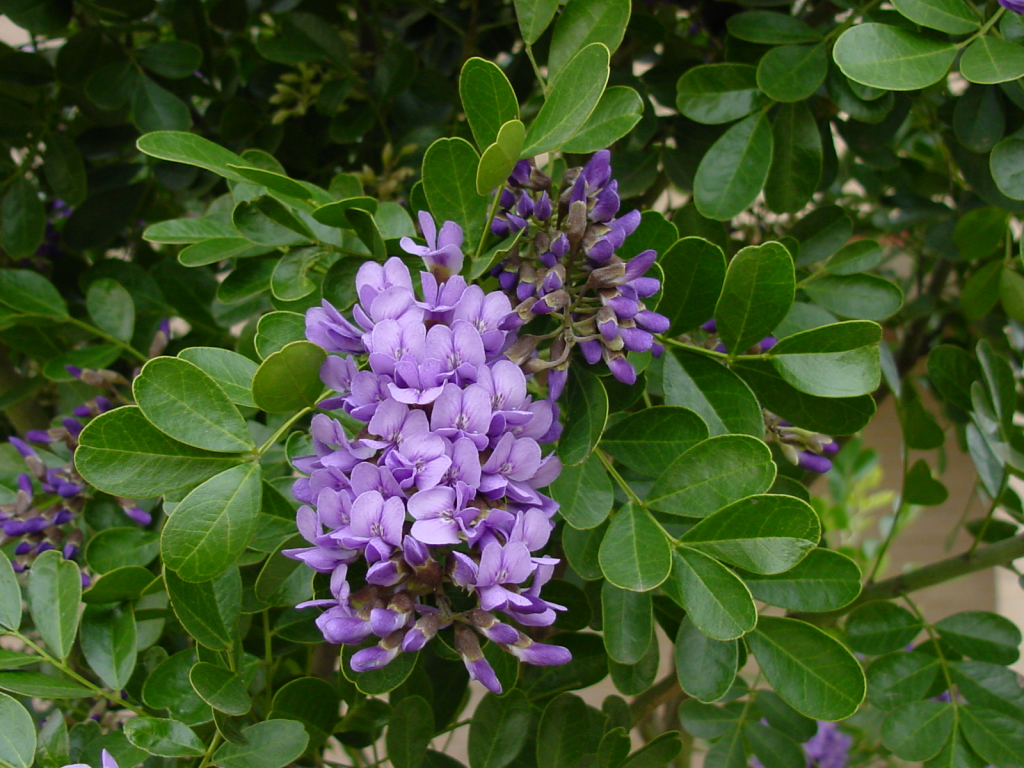
Texas mountain laurel makes a handsome evergreen large shrub or small tree. The dark, glossy, green foliage has a tough, nearly leathery texture and holds up well to trying Texas weather. Plant habit is upright oval to rounded and plants may have a single or more commonly multiple trunks. In addition to the lustrous foliage, these shrubs or small trees have dense showy panicles of blue, blue-purple, to white flowers in early to mid-spring. A delightful grape bubble gum scented fragrance emanates strongly from the flowers. Thick few-seeded pods contain half to one-inch-long bright red seeds. Texas mountain laurel is heat, drought, and high pH soil tolerant.
Exposure: Full sun to mostly sunny location. Flowering is reduced with increased shade.
Size: Slow grower, reaching 8 to 12 feet tall at maturity.
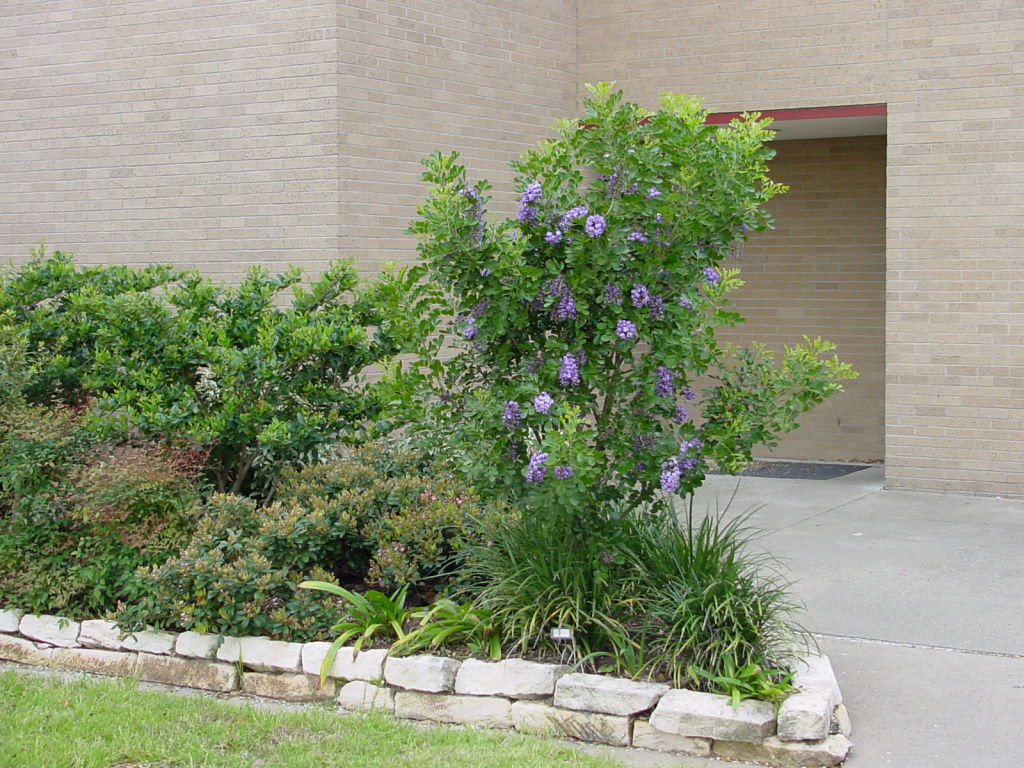
Plant Type: This species is typically an upright evergreen shrub in youth with the canopy broadening with age to become more rounded. The lower canopy tends to thin as plants age and take on more of a large shrub or small tree habit.
Hardiness Zones: USDA hardiness zones 8 to 10, or in protected locations in zone 7b.
Water Use: Once established, Texas mountain laurel is surprisingly drought tolerant persisting in much of our region on natural rainfall with supplementary irrigation needed only during drought periods.
Bloom Time: Peak bloom is usually in early to mid-spring, but may be earlier in mild winters.
Planting Time: Container-grown stock can be established most any time during the growing season but should be planted with sufficient time to root into surrounding soils prior to winter freezes. To minimize potential transplant shock, transplanting of container-grown plants is recommended.
Soil Type: Another positive feature of Texas mountain laurel is that it often performs best on limestone or moderately high pH soils; not a trait often seen in a broadleaved evergreen shrub. Positive drainage is critical to success as Texas mountain laurel does not tolerate poorly drained or wet soils.
Suggested Uses: Texas mountain laurel is popular as a specimen shrub, patio tree, or for use as an evergreen screen in xeric climates. This species is particularly useful in lower relative humidity environments where the thick leaves resist desiccation. Older specimens can be pruned up to accentuate a small tree form and show off the shredding older bark. It can be worth finding a place for a Texas mountain laurel just to be able to cut the fragrant flowers for use in floral bouquets.
Special Notes: Although sometimes used in crafts or jewelry, seeds are poisonous and access to them by children and pets should be supervised. Plants can be slow to flower from seed. This species is reported to be tolerant of cotton root rot. Foliar damage from genista brown moth caterpillars may occasionally need to be controlled.